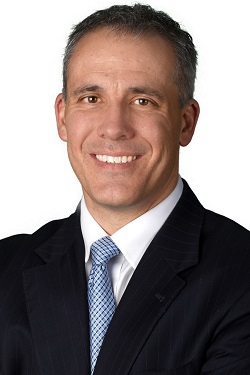
Choosing a surgeon is one of the more consequential decisions a patient ever makes, and most patients have no idea how to do it. That’s not their fault — the medical system doesn’t make this transparent. So I’m going to tell you what I’d tell my own family member.
This isn’t a pitch for my practice. Some of these criteria will lead you to me; some will lead you to someone else. Either way, you should make this decision deliberately.
Table of Contents
- Start with the credentials, but don’t stop there
- Ask about case volume — and ask specifically
- Look for a willingness to say “you don’t need surgery”
- Ask about second opinions, openly
- Find out what happens when something goes wrong
- Beware of surgeons who don’t do their own surgery
- Trust your impression of the conversation
- Frequently asked questions about choosing a surgeon
- If you’re evaluating surgeons, we welcome the conversation
Start with the credentials, but don’t stop there
Board certification is the floor, not the ceiling. For foot and ankle surgery, the relevant certifications come from the American Board of Foot and Ankle Surgery (ABFAS). There are two:
- Board Certified in Foot Surgery — the basic surgical certification
- Board Certified in Reconstructive Rearfoot/Ankle Surgery — a higher certification requiring additional case volume and a separate exam
If your surgery involves the rearfoot or ankle — flatfoot reconstruction, ankle fusion, Charcot reconstruction, severe deformity correction — ideally you want the second certification. Plenty of competent podiatric surgeons hold only the first. For complex cases, the second is worth seeking out.
For orthopedic surgeons, look for fellowship training in foot and ankle. A general orthopedist who occasionally does foot cases is a different surgeon than a fellowship-trained foot and ankle orthopedic specialist.
Ask about case volume — and ask specifically
I’ve written about this in more detail elsewhere, but it bears repeating. The single best predictor of outcome in elective foot and ankle surgery is how many of the specific procedure the surgeon has done.
Don’t ask “how many surgeries have you done?” That number is meaningless. Ask “how many of this exact procedure have you done?” A surgeon who’s done 500 Lapiplasty procedures and 5 ankle fusions is great for your bunion and not the right choice for your ankle.
Look for a willingness to say “you don’t need surgery”
This is one of the most underrated criteria. A good surgeon should be willing to tell you that surgery isn’t the right answer for your problem. If every patient walking into a surgical practice walks out with a surgery scheduled, that’s a red flag.
In my own practice, a significant fraction of new consultations end with a recommendation for conservative care — custom orthotics, physical therapy, footwear changes, time. Surgery should be the right answer because conservative care has been tried or wouldn’t work, not because surgery was the only option offered.
Ask about second opinions, openly
Ask the surgeon — directly — how they feel about you getting a second opinion. Any honest answer is “please do.” A surgeon who tries to talk you out of a second opinion is telling you something important about their confidence in the recommendation and their respect for you as a patient.
The same goes the other direction. A surgeon willing to give a second opinion on someone else’s case — including telling you when the original surgeon’s plan is the right one — is operating from a position of professional security.
Find out what happens when something goes wrong
Things go wrong in surgery sometimes. Not because the surgeon was bad — complications are part of medicine. What matters is what happens next.
Ask:
- If I have a problem at 9 p.m. on a Saturday, who am I calling?
- If I need an urgent post-op visit, how soon can I be seen?
- Are you the one I’ll see at follow-ups, or will I be seeing a PA?
- If a complication develops, are you going to manage it or refer me elsewhere?
A practice that takes ownership of its outcomes — including the difficult ones — is the kind of practice you want.
Beware of surgeons who don’t do their own surgery
In some teaching institutions, the surgeon you meet in clinic isn’t the surgeon doing the operation. A resident or fellow may be performing significant portions of the procedure under the attending’s supervision. This isn’t inherently bad — it’s how surgeons get trained — but you deserve to know.
If you’re paying private rates for surgery, you should know who has the scalpel.
Trust your impression of the conversation
Some of this is intuitive. Did the surgeon listen to you? Did they answer your questions or deflect them? Did they explain the procedure in language you actually understood? Did they walk through risks honestly or wave them off? Did they pressure you to schedule, or did they invite you to think about it?
The surgeons who are confident in their work and respectful of their patients tend to behave a certain way. The ones who aren’t, behave a different way. Most patients can feel the difference if they let themselves.
Frequently asked questions about choosing a surgeon
Should I choose a podiatrist or an orthopedic surgeon?
For most foot and ankle conditions, a fellowship-trained or experienced foot and ankle specialist from either profession will give you good care. What matters more than the credential’s letters is the surgeon’s specific experience with your specific condition.
Does insurance limit who I can see?
Yes, in most cases. Out-of-network care is possible but typically much more expensive. Within your network, you usually still have multiple choices — use them.
Should I read online reviews?
Reviews are useful for getting a sense of bedside manner, office responsiveness, and the patient experience. They’re less useful for evaluating surgical skill, which patients aren’t equipped to assess. Use them, but don’t rely on them.
Is it okay to switch surgeons mid-treatment?
Yes. If you’ve lost confidence in your current surgeon — especially before surgery has happened — you’re entitled to switch. Records can be transferred. Most surgeons take it professionally.
If you’re evaluating surgeons, we welcome the conversation
If you’re considering foot or ankle surgery and want a second opinion or a first opinion, I’d be glad to talk through your case. Learn more about my surgical practice and credentials, or call (208) 731-6321 to schedule a consultation at our Twin Falls office.